How to Select the Proper Topic
for Either Poetry or Fiction
I have learned repeatedly--because I am a slow learner--that it is necessary to choose the proper subject for any literary composition. A proper topic must be close but not too close to the core of an author's being.
Every time I have tried to write about personal grievances, that work was substandard to understate the matter. Perhaps the strength of emotions and the felt need to defend a position blocks the kind of analysis that makes good literature.
The trick is to choose subjects that the writer can be emotionally invested in without being so invested that anything comes across as a whine or a defense.
I have never been able to write well about either romantic partners or my relationship with my mother. But I can write reasonably well about some of the perspectives my mother and I both share. My mother and I share an abhorrence of war--my mother raised two sons and felt great relief when they passed draft age--the draft can be resumed within 90 days, after all. Therefore, I could write reasonably well about draft resistance. That idea, much influenced by my mother, became the ballad "Cherokee County Draft Dodgers," a topic that is close to my thoughts but is not so close that the topic kills objectivity.
In this ballad, set during World War 1, fathers in Cherokee County, Georgia, hide their draft-age sons in the woods. When soldiers from a nearby military base round up their sons, the fathers saw through the beams of Steele Bridge, causing the miltary vehicles holding their sons to fall into the river. The fathers pull their sons out of the vehicles, but their actions caused three men, soldiers, to die. Thus, the poem reflects on the moral conundrums inherent in resisting a government. During World War 1, Army pay was 30 dollars per month. Men earning more than that amount could apply for a financial hardship exemption. Those earning less--like those sharecroppers in Cherokee County, were stuckk. Probably, those soldiers killed may have been workers in the North's sweat shops and were in the mllitary because they, too, earned less than 30 dollars per month.
A paternal uncle, who died when I was an infant, had lost a leg and an eye at Anzio during World War II. I had never met this uncle and knew about him third-hand. My biological father told my mother about him--she had never met him either--who told me. That family connection was at once close enough and yet distant enough to produce a poem that was reasonably powerful but that did not cripple literature by my need to defend a position.
A third poem of mine that I like is "Knit, Purl," which is based on the story of a friend's father, who as an American soldier during World War II, liberated a concentration camp and struggled with depression for the rest of his life, a disorder that sapped all happiness out of family life. Perhaps because I have family members who struggled with depression but had never met the friend's father, I had just the right amount of both closeness and distance to write effectively.

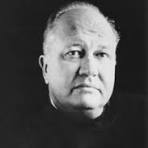
Theodore Roethke: The pronunciation of his last name has often been anglicized to Ret-key. Below is an interesting old film in which Roethke explains his views on poetry. I found it fascinating. In this video, Roethke reads one of his most famous poems, "The Waking," a villanelle about life and death. He also reads "My Papa's Waltz."
One of the tricks to writing in a regular meter is knowing when to vary the meter in a way that emphasizes the meaning the poem is trying to convey. To illustrate this idea, I will look at Theodore Roethke's My Papa's Walz:
My Papa’s Waltz
*********************************
Roethke's use of form is masterful. His choice of iambic trimeter--three stresses per line--mirrors the musical structure of a waltz with its distinct 3 beats per measure. The dance itself has 3 steps as well: a step forward or backward, a step to the side, and a step to close the feet together.
While many of his lines have exactly 6 syllables, some of the lines include an unstressed 7th syllable. This extra syllable adds to the musical flow but it also, in my view, signals a slight irregularity that corresponds to the boy's discomfort at dancing with an inebriated father as these extra syllables tend to occur in lines describing the child's ambivalent reaction to the dance.
Look at two lines:
1. The whiskey on your breath--note the pattern of stresses: stressed syllables are the first syllable of whiskey, on, and breath. The line has an even 6 syllables.
2. Now, compare that line "My right ear scraped a buckle." We can read that line metrically as right, scraped, and the first syllable of buckle as being stressed and that makes sense following the iambic trimeter pattern. But notice that the words themselves work against that pattern. After "my" the next three words are monosyllabic: right ear scraped. It would be our tendency to want to emphasize "ear" because it is a noun and vital to what is happening in the poem. In this way, all three words--right, ear, and scraped feel like they should be stressed. These words are totally unlike "The whiskey on your breath" in which the second syllable of whiskey is unstressed, both in the way it is pronounced and in the way it fits the meter.
In this way, Roethke strains against the expected rhythm to convey the irregularity of the situation.
The metrical irregularity is even more pronounced in the line "With a palm caked hard by dirt." If we follow the metrical pattern, two of the stressed syllables are an article and a preposition--while the noun palm and adjective hard are unstressed. If you try reading that line out loud following the regular metrical pattern indicated by the bolded words above, you will hear how unnatural it sounds and the way in which the meter you have come to expect is at odds with the actual wording and how this variation adds further emphasis to the meaning of the poem--the father's odd behavior, and the boy's uneasiness.
Note too that the line "with a palm caked hard by dirt" has seven syllables. Several other lines, those ending with words dizzy and easy, contain seven syllables but that seventh syllable is unstressed. This lack of a final stress helps convey the gliding movement of a waltz. But in this line, the seventh syllable is stressed. Once again, the irregularity of the situation is emphasized by the irregularity of the meter.
Create Your Own Website With Webador